
The only platform we can hand over completely.
KNX is an open standard rather than one company’s product. At the end of the job you own the house and everything in it, including the file that makes it work.
- The project file is yours, documented and handed over.
- Any certified KNX installer can pick it up. You are not tied to us.
- No single brain to fail. Each part of the house keeps working.
- Kit from different makers, chosen on merit rather than badge.
It costs a little more to set up than a closed system. What that buys is a house that is still easy to change in twenty years.
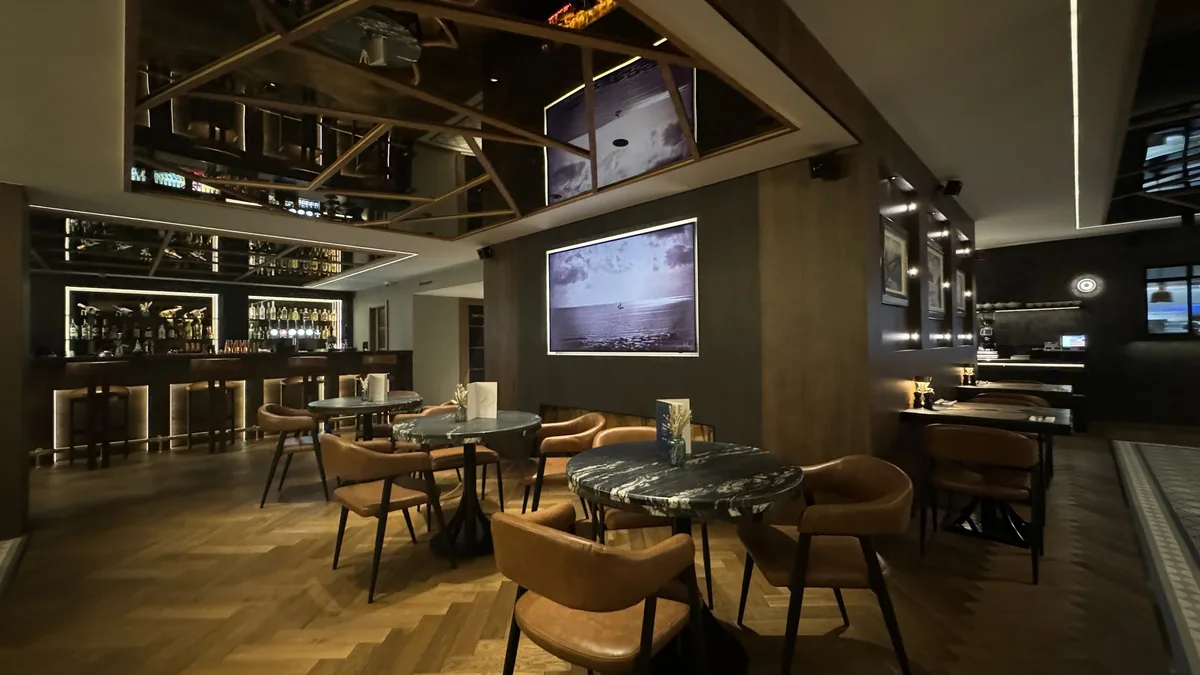
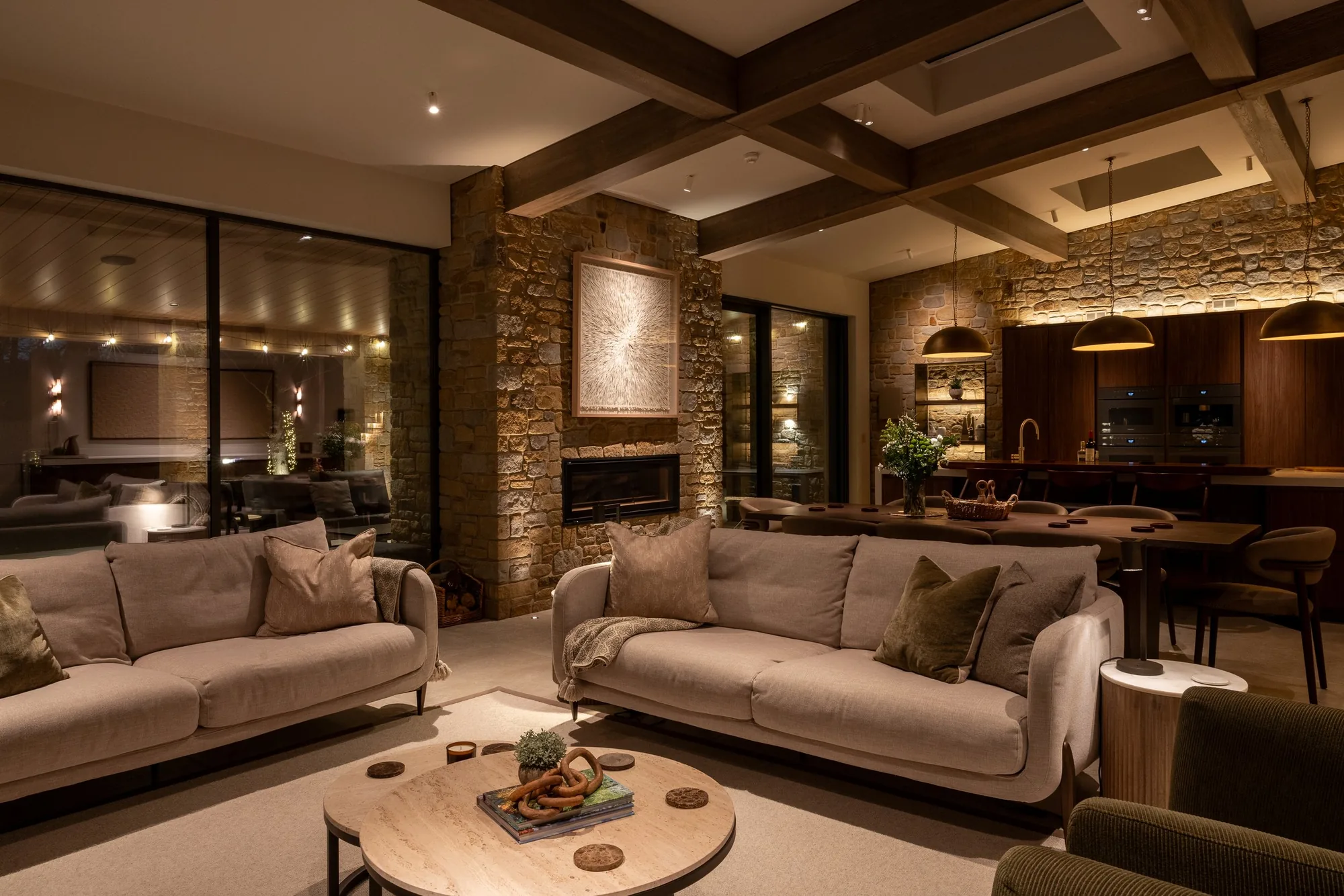
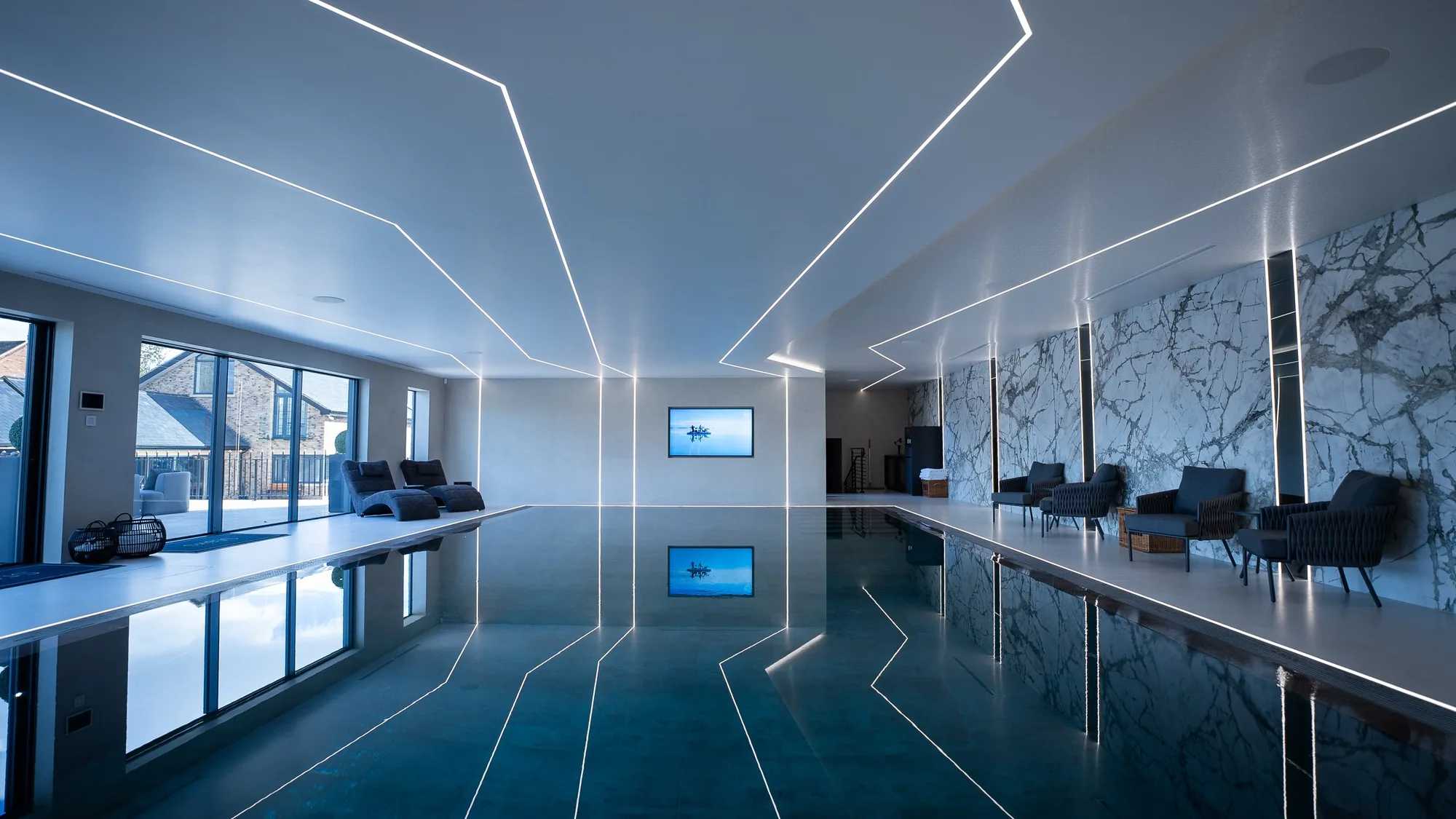
Buildings running KNX.
A standard, not a brand.
KNX is not a company selling boxes. It is an open standard administered by a non-profit association formed in Belgium in 1999, converging three earlier European systems into one protocol. It is approved as ISO/IEC 14543-3 internationally and EN 50090 in Europe, and the specification is royalty free.
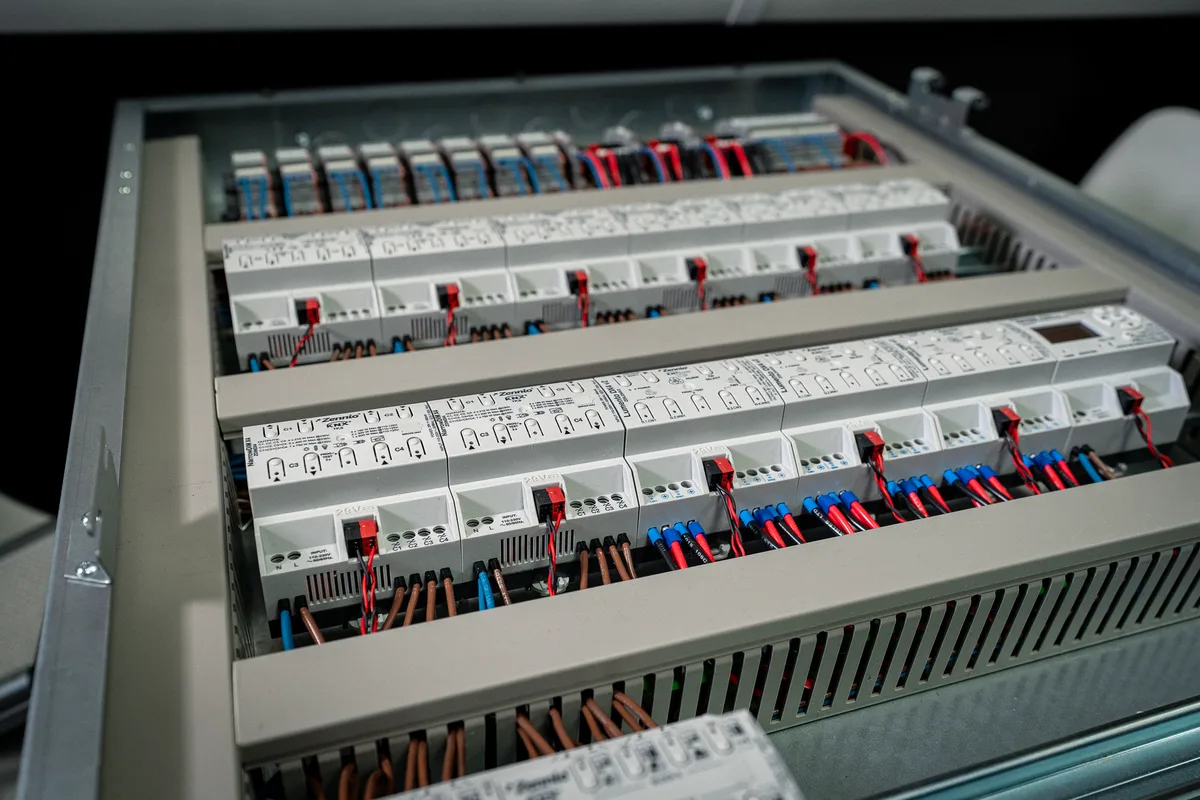
Around five hundred manufacturers build certified KNX devices, and every one of them is tested to interoperate regardless of make. There is no central controller: devices talk to each other over a bus, so a failed keypad takes out a keypad rather than a house.
What a KNX installation is made of.
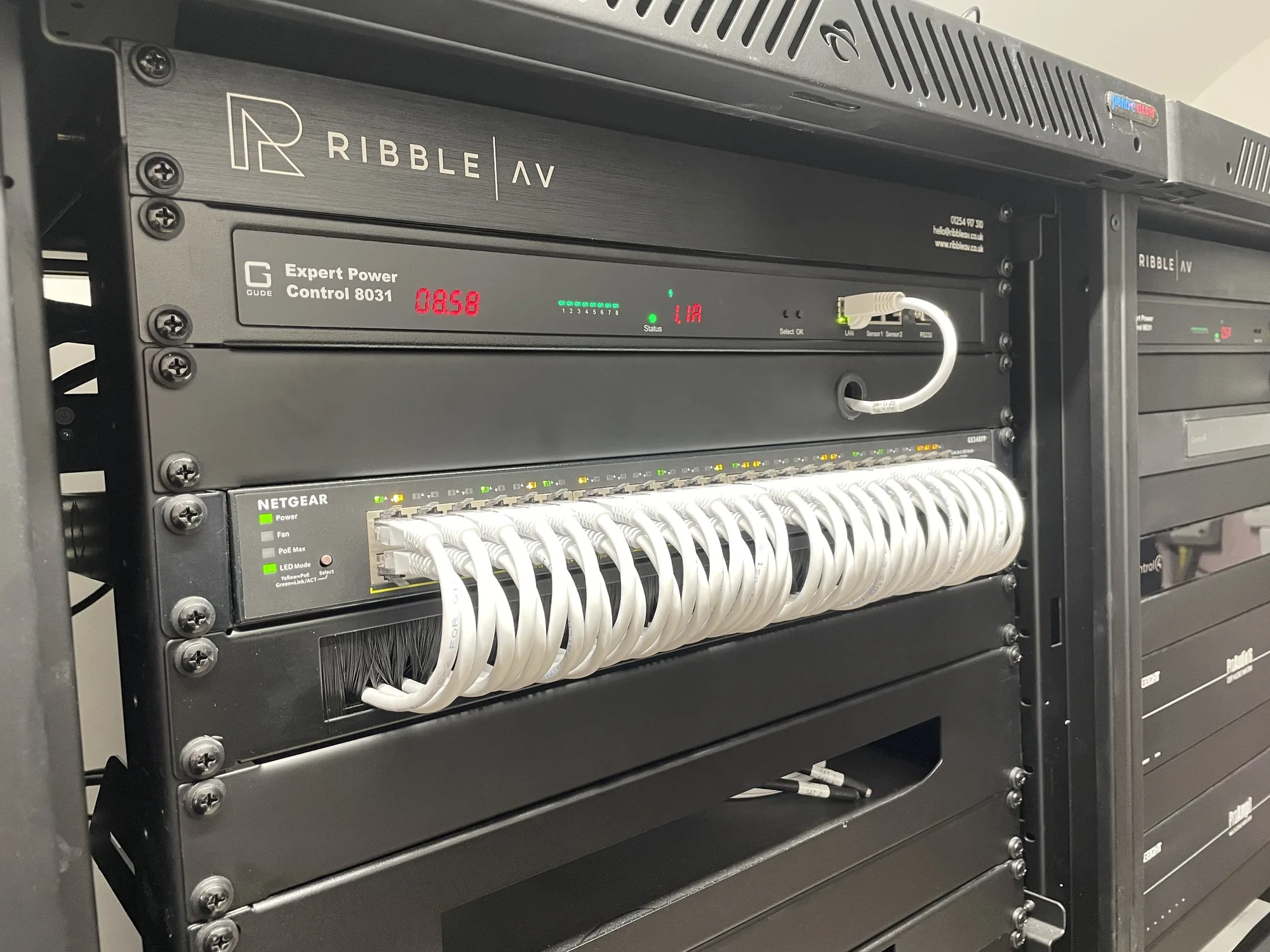
The hardware varies by project because the standard lets it. These are the parts every scheme has.
What drives the cost.
KNX is priced by device count and programming hours. The bus itself is cheap. Everything hanging off it is not.
Circuit and device count
Every dimmable circuit, blind motor, valve and keypad is a device to buy, wire, address and test. A large house with a detailed lighting design carries hundreds of them.
How much logic you want
Switching a light is quick. Scenes that follow sunset, ventilation that responds to humidity and heating that works around a tariff are programming time, and that is most of the value.
First fix or retrofit
KNX belongs in a building at first fix, where the bus can reach everywhere for very little money. In a finished house it needs KNX RF, which is capable but costs more per point.
Indicative only. A design visit produces a fixed price.
The systems KNX usually runs underneath.
KNX installed across the North West.
Clitheroe, Whalley, Longridge, Waddington, Ribchester, Chipping, Sabden, Downham, Slaidburn, Wiswell, Great Mitton, Hurst Green, Billington, Langho, Clayton-le-Dale
Fulwood, Penwortham, Broughton, Goosnargh, Grimsargh, Longton, Hutton, Lea, Barton, Woodplumpton
Lytham, St Annes, Ansdell, Fairhaven, Wrea Green, Kirkham, Freckleton, Warton, Singleton
Blackburn, Burnley, Accrington, Chorley, Lancaster, Garstang, Ormskirk, Rawtenstall, Padiham, Whitworth
Didsbury, Chorlton, Bowdon, Hale, Sale, Worsley, Prestwich, Ramsbottom, Bramhall, Cheadle Hulme
Knutsford, Wilmslow, Alderley Edge, Prestbury, Mobberley, Tarporley, Tattenhall, Chelford, Goostrey, Nether Alderley
Alderley Edge, Wilmslow, Prestbury, Hale Barns, Mottram St Andrew, Styal, Dean Row, Handforth
Woolton, Allerton, Aigburth, Formby, Crosby, Heswall, West Kirby, Caldy, Blundellsands
Windermere, Bowness, Ambleside, Grasmere, Coniston, Ullswater, Pooley Bridge, Cartmel, Grange-over-Sands, Keswick
Not on the list? Ask anyway. Plenty of our work sits outside the towns above, and a five-minute phone call will tell you whether we are the right people for it.
KNX, honestly answered.
The rest of the platforms we hold accreditation for.
Talk to us before first fix.
We visit, listen, measure, and come back with drawings and a fixed price. If another platform suits the house better, we will tell you that too.